 English
Views: 0 Author: Site Editor Publish Time: 2026-01-15 Origin: Site


Medical tape is a simple yet essential tool in wound care. Whether it's for securing dressings, protecting incisions, or supporting wounds, the way the tape is applied and removed can significantly impact comfort and healing outcomes.
Hypoallergenic and highly breathable. Ideal for patients with sensitive, fragile, or aging skin, and for securing lightweight dressings on low-friction areas. It is the gentlest option but has low adhesive strength.
2. Zinc Oxide Tape:
The most common and versatile type. It offers strong adhesion, durability, and good breathability. Perfect for securing heavy dressings, immobilizing joints (like knees or ankles), or for areas that experience movement and friction.
3. PE Tape:
Made of thin, clear polyurethane. It is waterproof and bacteria-proof while allowing moisture vapor to escape (breathable). Best used for securing IV lines, catheters, or dressings on joints and contoured areas where monitoring of the site without removal is necessary.
4. Silicone Tape:
Features gentle silicone-based adhesive that is virtually painless to remove and causes minimal skin trauma. Excellent for burn victims, patients with sensitive skin, scar management therapy, and for repeated applications on the same site.
① Clean & Dry:
Gently cleanse the area with mild soap and water. Rinse and pat thoroughly dry with a clean towel. Oils, lotions, or moisture will prevent proper adhesion.
② Inspect:
Check for redness, irritation, or broken skin around the application site.
③ Consider a Barrier:
For very sensitive skin or anticipated long-term use, apply a liquid skin barrier film or a thin layer of skin-protective wipe and let it dry completely before taping.
Ensure the primary wound dressing adequately covers the wound and is positioned correctly.
① Cut Length:
Cut strips long enough to secure the dressing with at least 1.5 to 2 inches (4-5 cm) of tape on healthy skin on each side.
② Avoid Tension:
Apply the tape without stretching it. Lay it down smoothly onto the skin. Stretching the tape creates tension that can lead to skin shearing, blisters, or discomfort.
③ Smooth and Secure:
Gently smooth the tape from the center outwards to eliminate wrinkles and ensure full contact with the skin.
④ Anchoring Technique:
For dressings, first anchor one end of the tape to the healthy skin on one side of the dressing. Lay the tape over the dressing without tension, and anchor the other end to the skin on the opposite side. For joints, use a "chevron" or "fan-fold" method to allow for movement.
Improper removal is a primary cause of skin trauma.
Always pull the tape parallel to the skin (180-degree angle), not straight up. Pull slowly in the direction of hair growth if possible.
Use a medical adhesive remover wipe or spray. Gently soak the edge of the tape to dissolve the adhesive before removal. For home use, a small amount of baby oil or mineral oil can be applied along the tape edge.
Use one hand to gently stabilize the skin while slowly peeling back the tape with the other hand. "Push" the skin away from the tape rather than "pulling" the tape off the skin.
Monitor the skin under and around the tape daily for signs of irritation, redness, itching, or rash (contact dermatitis).
Be aware of allergies to latex (found in some cloth tapes) or specific adhesives. Opt for hypoallergenic alternatives like paper or silicone tape if an allergy is suspected.
Never apply tape in a complete, constricting circle around a limb, finger, or toe, as swelling could impair circulation. Always leave gaps or use spiral application.
If the tape becomes wet, soiled, or loses adhesion, it must be changed promptly to prevent bacterial growth and skin maceration.
Unused medical tape, when stored in a cool, dry place, typically has a shelf life of 3-5 years from the manufacture date.
Once applied, tape should be considered part of the dressing and changed according to wound care protocols.
① The dressing is scheduled to be changed for wound assessment or cleansing.
② The tape becomes loose, soiled, wet, or its edges are peeling.
③ There is any sign of infection (increased pain, redness, swelling, pus) or skin irritation under the tape.
④ The patient reports discomfort, itching, or pain related to the tape.
⑤ As a general rule, inspect and assess the necessity of tape change at least every 24-48 hours.
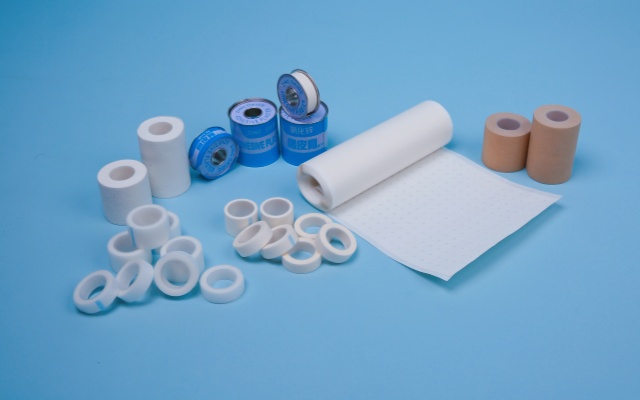
Mastering the proper use of medical tape is a fundamental clinical and first-aid skill. By carefully selecting the appropriate tape type, meticulously preparing the skin, applying and removing the tape with gentle technique, and adhering to regular assessment schedules, you can ensure optimal wound healing, patient comfort, and skin health.


