 English
Views: 0 Author: Site Editor Publish Time: 2026-01-19 Origin: Site


In orthopedic care, effective immobilization of fractures and injured limbs is crucial for proper healing. Two primary materials have been used for this purpose: traditional plaster of Paris bandages and modern synthetic casting tapes. While they serve the same fundamental purpose, their characteristics, applications, and performances differ significantly, influencing clinical choices and patient experiences.
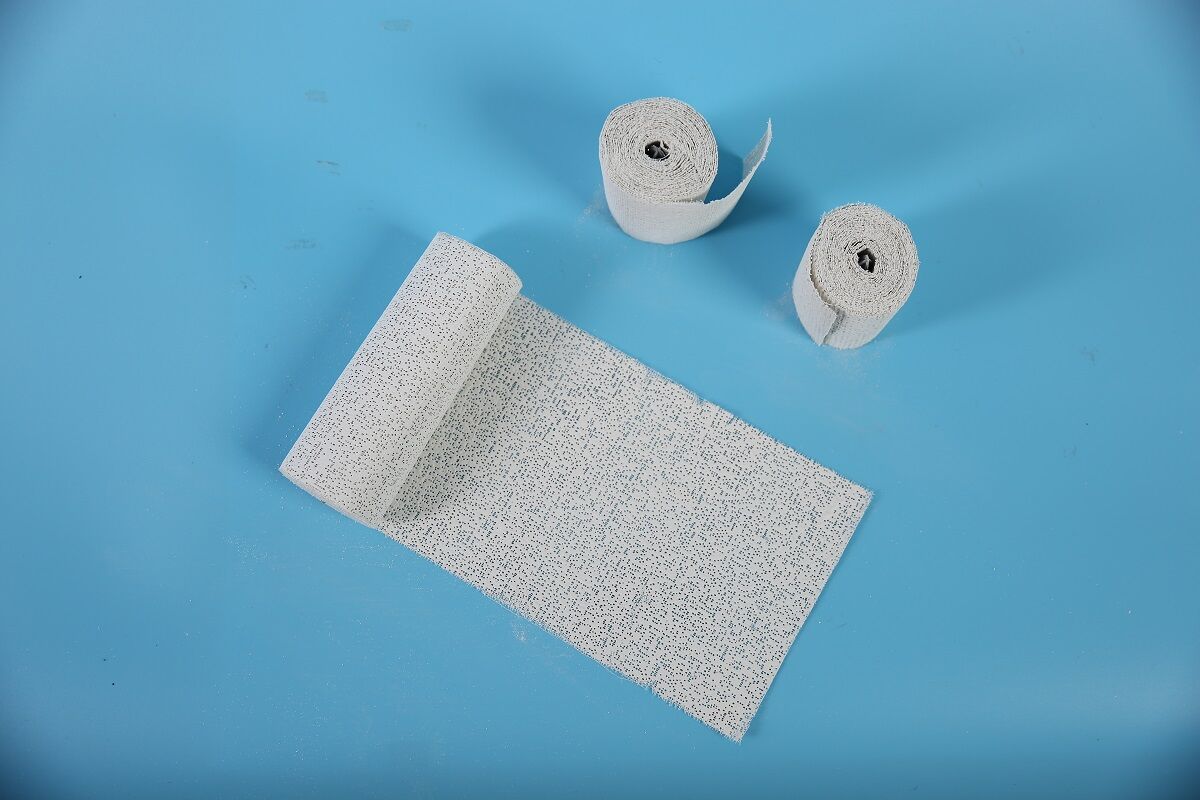

Aspect | Plaster of Paris Bandages | Casting Tapes |
Primary Material | Cotton gauze impregnated with calcium sulfate hemihydrate | Fiberglass or polyester mesh coated with polyurethane resin |
Setting Process | Crystallization reaction with water; slow setting | Polymerization triggered by water/chemical; rapid hardening |
Weight | Heavy | Very light |
Strength & Durability | Hard but brittle; prone to cracking or crumbling | High strength & toughness; resistant to wear |
Setting & Weight-bearing Time | Fully hardens in 24–48 hours; not weight-bearing initially | Sets in minutes; weight-bearing in 20–30 minutes |
X-ray Transparency | Poor; may obscure imaging | Radiolucent; allows clear X-rays through the cast |
Water Resistance | Not waterproof; softens and weakens if wet | Can be used with special waterproof liners for showering |
Breathability | Less breathable; skin may stay damp longer | More breathable due to open-weave structure |
Moldability / Working Time | Long working time; allows detailed molding, ideal for complex anatomy | Short working time; requires quick and skilled shaping |
Key Advantages | Low cost; excellent moldability; ideal for acute, complex fractures | Lightweight; strong; fast-setting; water-resistant option; X-ray friendly |
Key Disadvantages | Heavy; not waterproof; slow drying; poor X-ray transparency | Higher cost; requires application skill; less forgiving during molding |
Typical Use Cases | 1. Acute, unstable, or complex fractures requiring precise molding | 1. Most stable fractures for definitive treatment |
The choice between plaster bandages and modern synthetic casting tapes represents a balance between traditional craftsmanship and contemporary material science. Plaster remains a valuable and cost-effective tool for specific situations that require intricate molding. However, for the majority of applications, synthetic tapes provide a clear advantage in terms of patient comfort, durability, and convenience, making them the predominant choice in modern orthopedic practice. The decision ultimately hinges on the specific injury, clinical requirements, and the patient's lifestyle needs.


